
info@universallab.org
WhatsApp: +41762172997
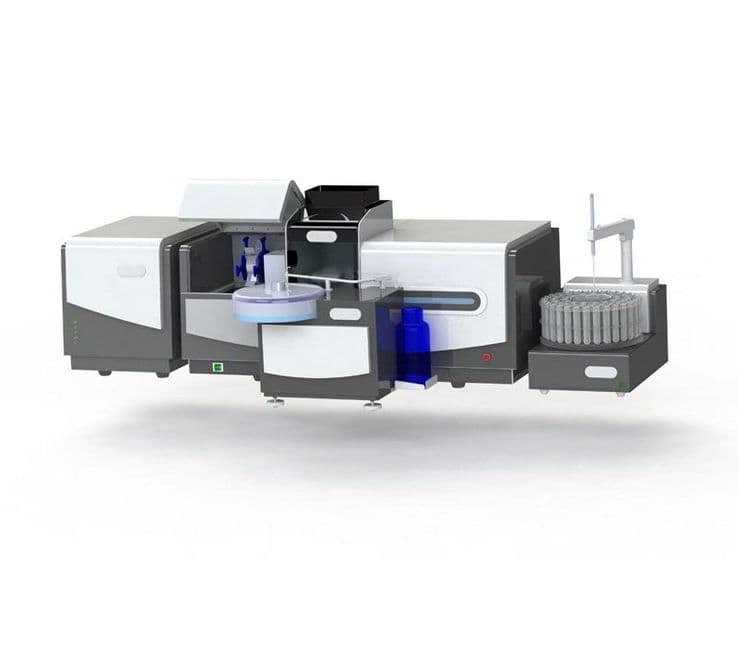
Atomic Absorption Spectroscopic (AAS) Analysis
Variant (SKU)
single element quantification
Price may vary based on selected options
Delivery time: 1 ~ 2 weeks
AAS (Atomic Absorption Spectroscopy) is a widely used analytical technique for the quantitative determination of metal elements in a variety of sample types. It offers precise and sensitive measurements of elemental concentrations, especially for trace and ultra-trace metals.
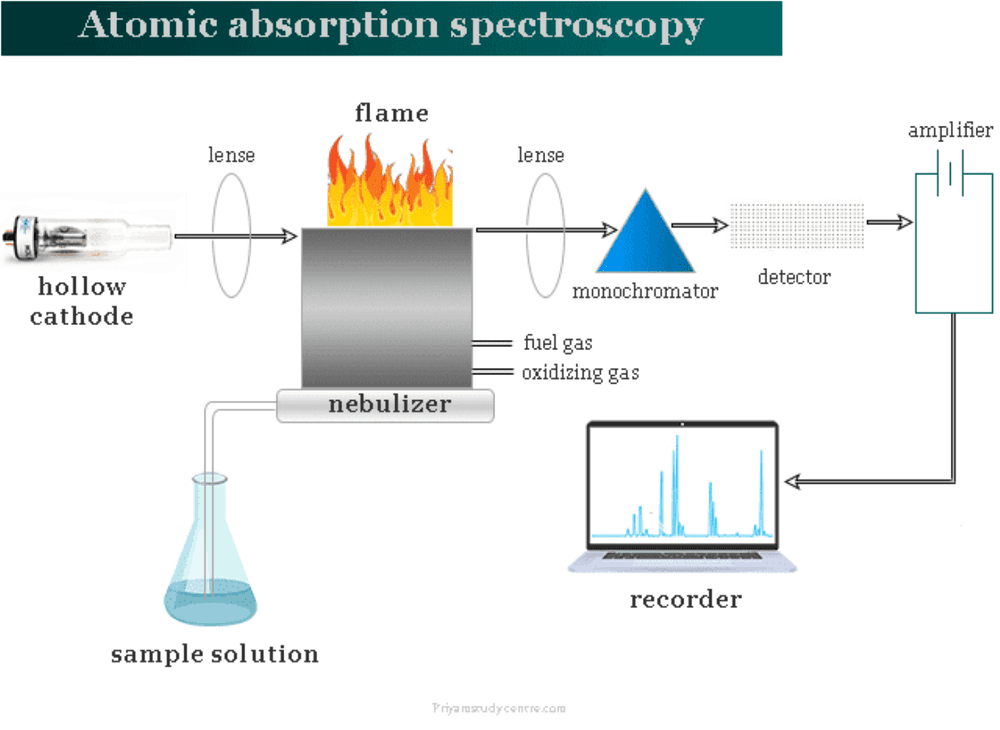
The basic principle of AAS involves atomizing the sample—typically in a flame or graphite furnace—and measuring the absorption of light at specific wavelengths by free atoms of the target element. Each element absorbs light at a characteristic wavelength, and the amount of light absorbed is directly proportional to the concentration of that element in the sample.
Typical applications include the determination of heavy metals such as lead (Pb), cadmium (Cd), arsenic (As), mercury (Hg), and chromium (Cr) in water, soil, food, and biological samples. AAS is also commonly used for measuring calcium (Ca), magnesium (Mg), iron (Fe), and zinc (Zn) in pharmaceutical and nutritional products. Industries that widely apply AAS include environmental monitoring, food safety, pharmaceuticals, clinical diagnostics, metallurgy, mining, and chemical manufacturing.

Introduction
Introduction
AAS (Atomic Absorption Spectroscopy) is a widely used analytical technique for the quantitative determination of metal elements in a variety of sample types. It offers precise and sensitive measurements of elemental concentrations, especially for trace and ultra-trace metals. The basic principle of AAS involves atomizing the sample—typically in a flame or graphite furnace—and measuring the absorption of light at specific wavelengths by free atoms of the target element. Each element absorbs light at a characteristic wavelength, and the amount of light absorbed is directly proportional to the concentration of that element in the sample. Typical applications include the determination of heavy metals such as lead (Pb), cadmium (Cd), arsenic (As), mercury (Hg), and chromium (Cr) in water, soil, food, and biological samples. AAS is also commonly used for measuring calcium (Ca), magnesium (Mg), iron (Fe), and zinc (Zn) in pharmaceutical and nutritional products.
Industries that widely apply AAS include environmental monitoring, food safety, pharmaceuticals, clinical diagnostics, metallurgy, mining, and chemical manufacturing. Key Feature
- Elemental Quantification — Measures concentrations of metals and semi-metals in the ppm to ppb range
- High Selectivity — Targets specific elements using element-specific light sources
- Minimal Matrix Interference — Flame and graphite furnace options allow adaptability to diverse matrices
- Fast Analysis — Rapid sample-to-result time for routine and high-throughput testing
- Cost-Effective — Compared to techniques like ICP-MS or ICP-OES, AAS remains accessible and economical Strengths
- Accepts both conductive and insulating materials
- Faster data collection and depth profiling than mass spectroscopy techniques
- Reduced mass interferences improve compositional accuracy for low-mass elements
- One tool for surface, depth profile, and bulk analysis
- Can detect light elements such as H, C, N, O that methods like ICP-MS cannot detect

Principle
Principle
Atomic Absorption Spectroscopy is based on the absorption of light by free atoms in the gaseous state. When a sample containing metal ions is atomized in a flame or graphite furnace, the ground-state atoms absorb light of specific wavelengths emitted by a hollow cathode lamp (HCL) or electrodeless discharge lamp (EDL). The amount of light absorbed is directly proportional to the concentration of the element in the sample.
Principle
Test Procedure
The AAS analysis process includes the following steps:
- Sample Preparation: The sample is digested or diluted into a suitable aqueous solution.
- Atomization: The solution is introduced into a flame or graphite furnace to produce free atoms.
- Light Absorption: A beam of element-specific light passes through the atomized sample, and the amount of absorbed light is measured.
- Calibration and Quantification: A calibration curve is generated using standards, and the concentration of the target element is calculated.
Sample Requirements
- Form: Liquid samples or solid samples digested into solution
- Volume: Minimum 5–10 mL for flame AAS, 1–2 mL for furnace AAS
- Concentration range: Ideally within 0.1–10 ppm; dilution or pre-concentration may be needed
- Matrix considerations: Indicate acid type, salt content, and presence of organic matter
- Packaging: Use clean, acid-washed polyethylene bottles; avoid glassware for trace analysis
- Special cases: Inform us of any high-matrix samples or volatile metals (e.g., Hg)
Application Case
Application

Applicable industries
Applicable Sample Types:
- Water and wastewater: heavy metal contamination (Pb, Cd, As, Cr, Hg, etc.)
- Soils and sediments: total metal content after acid digestion
- Food and beverages: mineral nutrients and toxic metals (Na, K, Zn, Fe, Mn, Cu, etc.)
- Pharmaceuticals: elemental impurities in raw materials and finished products
- Biological fluids: trace element analysis in serum, blood, or urine
- Industrial products: plating solutions, lubricants, alloys, and catalysts
- Environmental samples: air filters, plant tissues, particulate matter

Industrial Application
Industries and Applications:
- Environmental monitoring: regulatory compliance for drinking and wastewater
- Food and agriculture: quality control of essential minerals and safety of toxic elements
- Pharmaceuticals: supports ICH Q3D guidelines on elemental impurities
- Mining and metallurgy: ore grade evaluation and metal recovery efficiency
- Clinical diagnostics: essential trace element monitoring in health assessments
- Manufacturing: quality control of raw materials and production fluids
Example Result
Example of AAS result table (Pb in drinking water)
| Parameter | Value | Unit |
|---|---|---|
| Sample ID | DW-042 | – |
| Element | Pb | – |
| Measured concentration | 0.012 | mg/L |
| Detection limit | 0.002 | mg/L |
| Method used | FAAS | – |
| Instrument | PerkinElmer AAnalyst 400 | – |
What our customers are saying
Need precise analysis? Contact us – we'll help you choose the best solution for your needs.

Frequently Asked Questions
FAAS (Flame Atomic Absorption Spectroscopy) is used for higher concentration ranges (ppm), while GFAAS (Graphite Furnace AAS) enables detection down to ppb or lower. FAAS is faster and suited for routine analysis; GFAAS offers higher sensitivity for trace elements but takes longer per measurement.
No. AAS is typically used for metal and semi-metal elements. For non-metals, alternative techniques such as ICP, XRF, or ion chromatography are recommended.
Background absorption from the matrix or flame gases may interfere with the signal. Techniques like deuterium lamp or Zeeman background correction ensure accurate absorbance measurements.
Key factors include sample preparation, contamination, calibration standards, instrument alignment, and matrix effects. Proper digestion, clean labware, and matrix-matched standards improve reliability.
Because AAS relies on element-specific absorption, each metal has a unique wavelength and calibration curve. Even similar concentrations of different metals produce different absorbance responses.