
info@universallab.org
WhatsApp: +41762172997

logo-header
​
logo
Material Testing
Mechanical Testing
Tensile TestFibre Tensile TestHardness TestImpact TestFatigue TestOthers
Thermal Testing
Thermomechanical AnalysisDSCTGATGA (TG-DSC, TG-DTA)
Surface, Coating and Corrosion
Adhesion TestScratch TestCorrosion Cycle Test
Physical Properties
Functional propertiesPorosityDensity
Elemental & Chemical Composition
Compositional analysisElemental analysis
Microscopic Characterization
Particle analysisMicroscopy
Product Testing
Food & Agriculture Testing
Consumer Goods Testing
Electronics & Electrical Testing
Medical & Pharmaceutical Testing
Automotive & Transportation Testing
Packaging & Materials Testing
Chemical & Hazardous Substances Testing
Semiconductor Testing
Battery Testing
Petrochemical Testing
Environmental Test
Water Testing
Drinking Water Analysis
Soil & Sediment Testing
Soil Chemistry (pH, Nutrients)
Air Testing
Particulate Matter (PM2.5, PM10)
Noise & Acoustic Testing
Industrial/Occupational Noise
Waste & Sludge Testing
Hazardous Waste Classification
Instrumental Test
Spectroscopy
Emission
XRFXPSICP-OESGD-OES
Absorption
FTIRUV/VIS/NIRAAS
Mass Spectrometry
SIMSICP-MS
Other
RamanNMR
Microscopy
Electron
SEMTEMEBSDEMPA
Other
AFMFIB
Mechanical
Volumetric
Tensile TestFibre Tensile TestImpact TestFatigue Test
Surface
HardnessNanoindentationScratch
Others
Thermal Analysis
TGADSC
Physical Analysis
BETLaser diffractionDensityContact AngleZeta potential
Chromatography
GCHPLCIC
Services
  • Applications
  • Techniques
  • Standards
  • Industries
Regulatory testing
  • PFAS
  • REACH
  • VOC
Environmental testing
  • Water
  • Gas
Data analysis
  • XRD
  • XPS
  • FTIR
  • Raman
  • NMR
  • CT
  • SIMS
  • TGA
Blog
  • Knowledge
  • News
  • Policy
  • About us
    Contact

    Sample Requirements

    Application Case

    Example Result

    What our customers are saying

    Need precise analysis? Contact us – we'll help you choose the best solution for your needs.

    info@universallab.org+41 762172997
    Lab technician holding a blue flask

    Frequently Asked Questions

    HomeCategoryCart
    logo-footer-shop1

    European material analytical and measuring service provider dedicated for academic and industrial research

    About Us
    CareersTerms & ConditionsPrivacy Policy
    Customer Services
    Help CenterBecome a partnerReturns & Refunds
    Contact Us

    Parkstrasse 1, 5234 Villigen, Switzerland

    Email: info@universallab.org

    Phone: +41 762172997

    VAT: CHE-265.266.739 MWST

    © 2026 By Universallab. All rights reserved.

    This site is protected by reCAPTCHA and the Google Privacy Policy and Terms of Service apply.
    product
    product-0

    Mechanical impact test

    Variant (SKU)
    RT
    RT~200℃
    200~400℃
    400~600℃
    600~700℃
    –80℃~RT
    –100~80℃
    –190~–100℃

    Price may vary based on selected options

    Delivery time: 1 ~ 2 weeks

    Introduction

    Introduction

    Introduction

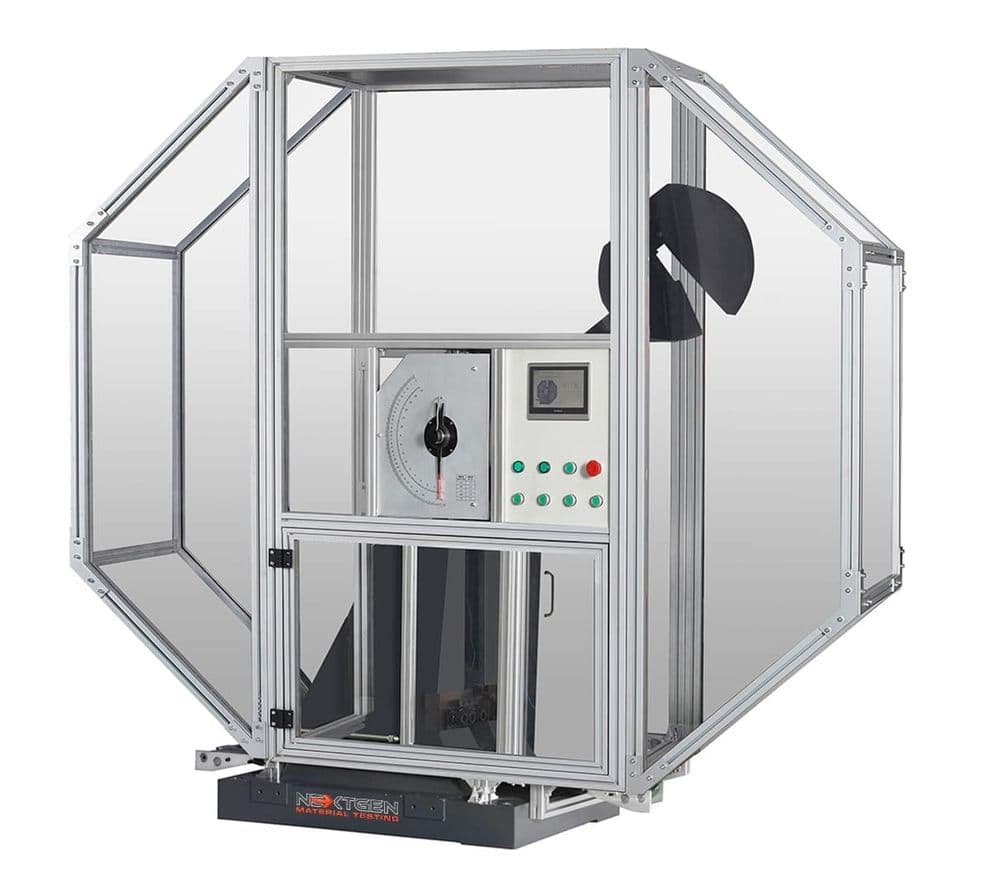
    Mechanical Impact Testing is a fundamental technique used to assess how materials respond to sudden, high-rate loading conditions such as shocks, collisions, or drops. This method simulates real-world impact scenarios and is commonly used to evaluate a material’s toughness, brittleness, and energy absorption capabilities. Tests such as the Charpy and Izod impact tests involve striking a notched specimen with a swinging pendulum to measure the energy required to fracture the material. These tests are essential for understanding failure behavior under dynamic conditions and are widely applied in fields like automotive, aerospace, construction, and consumer product safety to ensure reliability and performance under impact loads.

    Principle

    Principle

    Principle

    Mechanical impact testing works by applying a sudden force to a notched or unnotched specimen to evaluate its ability to absorb energy before fracturing. In commonly used tests like the Charpy or Izod impact tests, a pendulum hammer is released from a known height and strikes the sample with controlled velocity. The energy absorbed by the specimen during fracture is calculated based on the difference between the initial potential energy of the pendulum and the remaining energy after impact. This absorbed energy reflects the material’s toughness — its resistance to crack propagation and failure under dynamic loading. The presence of a notch in the specimen helps localize stress and simulate real-world stress concentrators such as flaws or joints.

    Mechanical impact testing is used to evaluate a material’s ability to absorb energy and resist fracture under sudden or high-speed loading conditions. It helps determine impact strength, ductility, and toughness.

    We offer various standardized methods including:

    • Charpy impact test (ASTM E23, ISO 148)
    • Izod impact test (ASTM D256)
    • Drop-weight impact test (ASTM D7136 / D3763)

    Samples should generally conform to standard dimensions (e.g., ISO or ASTM specifications). Notched or unnotched samples may be required depending on the test type. If you are unsure, we can assist with specimen preparation or provide guidance.

    Yes, but it depends on the testing method. Drop-weight testing allows more flexibility, while Charpy and Izod tests require specific sizes and shapes. Please send us a photo or drawing for evaluation.

    Applicable industries

    Applicable industries

    Industrial Applications

    • Aerospace: Used to test fuselage panels, turbine blades, and composite components for resistance to bird strikes and debris impact.
    • Automotive Industry: Applied to evaluate body structures, bumpers, and interior parts to improve crashworthiness and occupant safety.
    • Construction and Civil Engineering: Impact tests on concrete, steel reinforcements, and glass panels help ensure safety and resilience in buildings and bridges.
    • Energy Sector: Used to assess wind turbine blades, nuclear reactor parts, and offshore structures under impact or extreme load conditions.
    • Consumer Electronics and Packaging: Ensures that devices and packaging materials can withstand drops and accidental impacts.
    • Medical Devices: Impact testing of prosthetics, orthopedic implants, and surgical tools guarantees mechanical durability during real-world use.
    Applicable materials type

    Applicable materials type

    Applicable materials type

    • Metal Materials: Such as steel, aluminum, copper, and alloys, for evaluating toughness and low-temperature brittleness.
    • Polymers / Plastics: Including thermoplastics, thermosets, and elastomers, to assess impact strength and fracture behavior.
    • Ceramics and Glass: To study brittle fracture and energy absorption characteristics.
    • Composite Materials: Such as carbon fiber and glass fiber composites, for analyzing delamination and impact resistance.
    • Natural Materials: Like wood and bamboo, used in structural and architectural applications.
    MaterialSection DimensionsNotch Cross-sectional Area A (cm²)Empty Pendulum Energy (N*m)Impact Absorbed Energy (N*m)Impact Work (N*m)Impact Toughness (N*m/cm²)
    Length a (mm)Width b (mm)
    Cast Iron10.1008.4400.8500.4882.3191.831
    Low-carbon Steel10.0007.9000.7900.488150.327149.839
    Please follow these guidelines for optimal testing:

    Please follow these guidelines for optimal testing:

    • Standardized Specimen Shape and Size: Samples are usually prepared in standardized shapes (e.g., rectangular bars or notched specimens) according to test standards like ASTM E23 or ISO 148 to ensure consistent results.
    • Notch Presence: Many impact tests (Charpy, Izod) require a machined notch to concentrate stress and simulate crack initiation sites. The notch geometry must meet specified dimensions.
    • Surface Condition: The sample surface should be free from defects such as cracks, corrosion, or excessive roughness that might influence fracture behavior.
    • Material Homogeneity: Samples should represent the bulk material and be free from significant inhomogeneities or prior damage.
    • Size and Mass: Samples must fit the impact testing machine’s specifications, including weight and dimensions, to ensure accurate energy absorption measurement.
    • Temperature Conditioning: For certain tests, samples may need to be conditioned at specific temperatures to evaluate impact toughness under different environmental conditions.

    Mechanical impact testing is a method used to evaluate a material's resistance to sudden force or shock loading, often simulating real-world impact conditions. It helps determine properties such as toughness, fracture behavior, and energy absorption capacity.