
info@universallab.org
WhatsApp: +41762172997
logo-header
​
logo
Material Testing
Mechanical Testing
Tensile TestFibre Tensile TestHardness TestImpact TestFatigue TestOthers
Thermal Testing
Thermomechanical AnalysisDSCTGATGA (TG-DSC, TG-DTA)
Surface, Coating and Corrosion
Adhesion TestScratch TestCorrosion Cycle Test
Physical Properties
Functional propertiesPorosityDensity
Elemental & Chemical Composition
Compositional analysisElemental analysis
Microscopic Characterization
Particle analysisMicroscopy
Product Testing
Food & Agriculture Testing
Consumer Goods Testing
Electronics & Electrical Testing
Medical & Pharmaceutical Testing
Automotive & Transportation Testing
Packaging & Materials Testing
Chemical & Hazardous Substances Testing
Semiconductor Testing
Battery Testing
Petrochemical Testing
Environmental Test
Water Testing
Drinking Water Analysis
Soil & Sediment Testing
Soil Chemistry (pH, Nutrients)
Air Testing
Particulate Matter (PM2.5, PM10)
Noise & Acoustic Testing
Industrial/Occupational Noise
Waste & Sludge Testing
Hazardous Waste Classification
Instrumental Test
Spectroscopy
Emission
XRFXPSICP-OESGD-OES
Absorption
FTIRUV/VIS/NIRAAS
Mass Spectrometry
SIMSICP-MS
Other
RamanNMR
Microscopy
Electron
SEMTEMEBSDEMPA
Other
AFMFIB
Mechanical
Volumetric
Tensile TestFibre Tensile TestImpact TestFatigue Test
Surface
HardnessNanoindentationScratch
Others
Thermal Analysis
TGADSC
Physical Analysis
BETLaser diffractionDensityContact AngleZeta potential
Chromatography
GCHPLCIC
Services
  • Applications
  • Techniques
  • Standards
  • Industries
Regulatory testing
  • PFAS
  • REACH
  • VOC
Environmental testing
  • Water
  • Gas
Data analysis
  • XRD
  • XPS
  • FTIR
  • Raman
  • NMR
  • CT
  • SIMS
  • TGA
Blog
  • Knowledge
  • News
  • Policy
  • About us
    Contact

    Sample Requirements

    Application Case

    Example Result

    What our customers are saying

    Need precise analysis? Contact us – we'll help you choose the best solution for your needs.

    info@universallab.org+41 762172997
    Lab technician holding a blue flask

    Frequently Asked Questions

    HomeCategoryCart
    logo-footer-shop1

    European material analytical and measuring service provider dedicated for academic and industrial research

    About Us
    CareersTerms & ConditionsPrivacy Policy
    Customer Services
    Help CenterBecome a partnerReturns & Refunds
    Contact Us

    Parkstrasse 1, 5234 Villigen, Switzerland

    Email: info@universallab.org

    Phone: +41 762172997

    VAT: CHE-265.266.739 MWST

    © 2026 By Universallab. All rights reserved.

    This site is protected by reCAPTCHA and the Google Privacy Policy and Terms of Service apply.
    product
    product-0
    product-1

    Density Testing

    Variant (SKU)
    True density
    Bulk density
    Tap density
    Compacted density

    Price may vary based on selected options

    Delivery time: 1 ~ 2 weeks

    Fail to render because of error(s) in the content

    For powders, typically 10–50 g; for solids, one piece large enough for immersion.

    Yes, but they must be handled carefully and tested quickly to avoid moisture absorption.

    Yes, by comparing true density and bulk/compacted density, we can calculate total porosity.

    Principle

    Principle

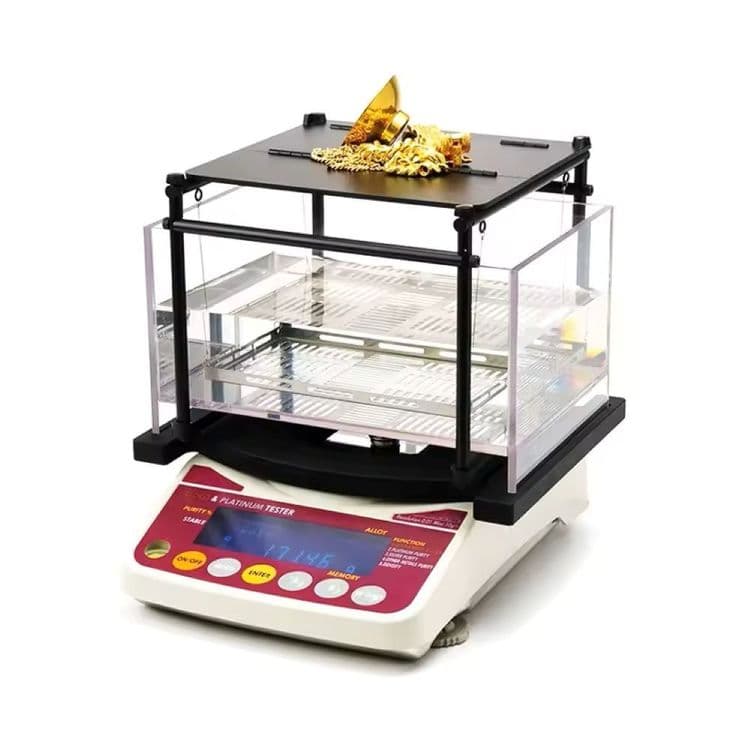
    Density testing applies to a wide variety of materials:

    • Material types: powders, granules, solid pieces, porous materials, liquids
    • Typical application scenarios:
      • Evaluate powder packing and flow behavior
      • Control porosity and compaction quality
      • Optimize formulations in pharmaceutical tablets and ceramic sintering
      • Verify solid parts’ material integrity and quality
    • Industries served: pharmaceuticals, ceramics, metallurgy, plastics, additive manufacturing, chemical engineering

    Case 1: Pharmaceutical Powder

    • Goal: Determine bulk and tapped density for tablet formulation
    • Result: Bulk density 0.42 g/cm³; tapped density 0.55 g/cm³; compressibility index 23.6%

    Case 2: Metal Compact

    • Goal: Measure true and compacted density for sintering optimization
    • Result: True density 7.85 g/cm³; compacted density 6.9 g/cm³; porosity 12.1%

    Case 3: Ceramic Porous Block

    • Goal: Assess porosity using Archimedes’ method
    • Result: Archimedes’ density 2.45 g/cm³; apparent porosity 18.5%

    Output Formats

    • Density values in g/cm³ or kg/m³
    • Porosity percentages
    • Data tables and comparative graphs
    • PDF report with detailed methods and results
    Principle

    Principle

    To ensure accurate and reliable results, please prepare samples according to the following guidelines:

    • True Density (Gas Displacement Method):
      • Powder: preferably provide at least 10 mL in volume.
      • Bulk solids: diameter ≤ 15 mm, height ≤ 35 mm, total volume ≥ 6 mL.
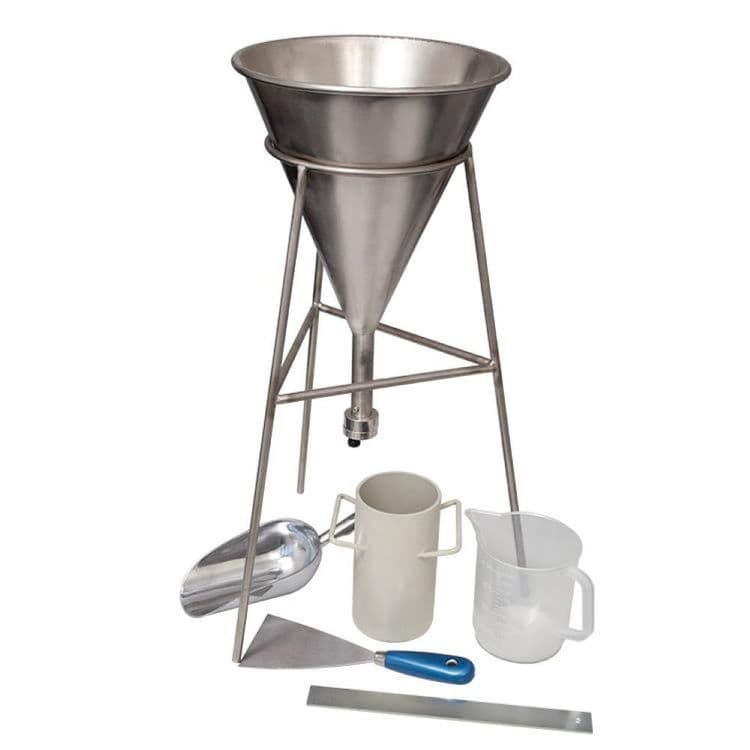
    • Tapped Density or Bulk (Loose) Density:
      • Powder: at least 50 g or ~80 mL in volume.
    • Compacted Density:
      • Powder: at least 20 g.
    • Liquid Density:
      • Liquid samples (flowable): at least 10 mL.
    • Foam Plastic Density (Immersion Method):
      • Suitable for granular or seamless dense plastic materials.
    • Archimedes’ Principle Density Measurement:
      • Solid samples: appropriate size, smooth surface, no deep pores or cavities, at least 1 g in mass. General notes:
    • Samples should be clean, dry, and free of contaminants.
    • For hygroscopic or reactive materials, please inform us in advance.
    • For porous or delicate samples, discuss material compatibility and handling with our lab.

    Density testing is a core analytical method for understanding the structure and performance of materials.
    From powders to polymers, it reveals how particles are packed, how porous a material is, and how it will behave in real-world applications.