
info@universallab.org
WhatsApp: +41762172997
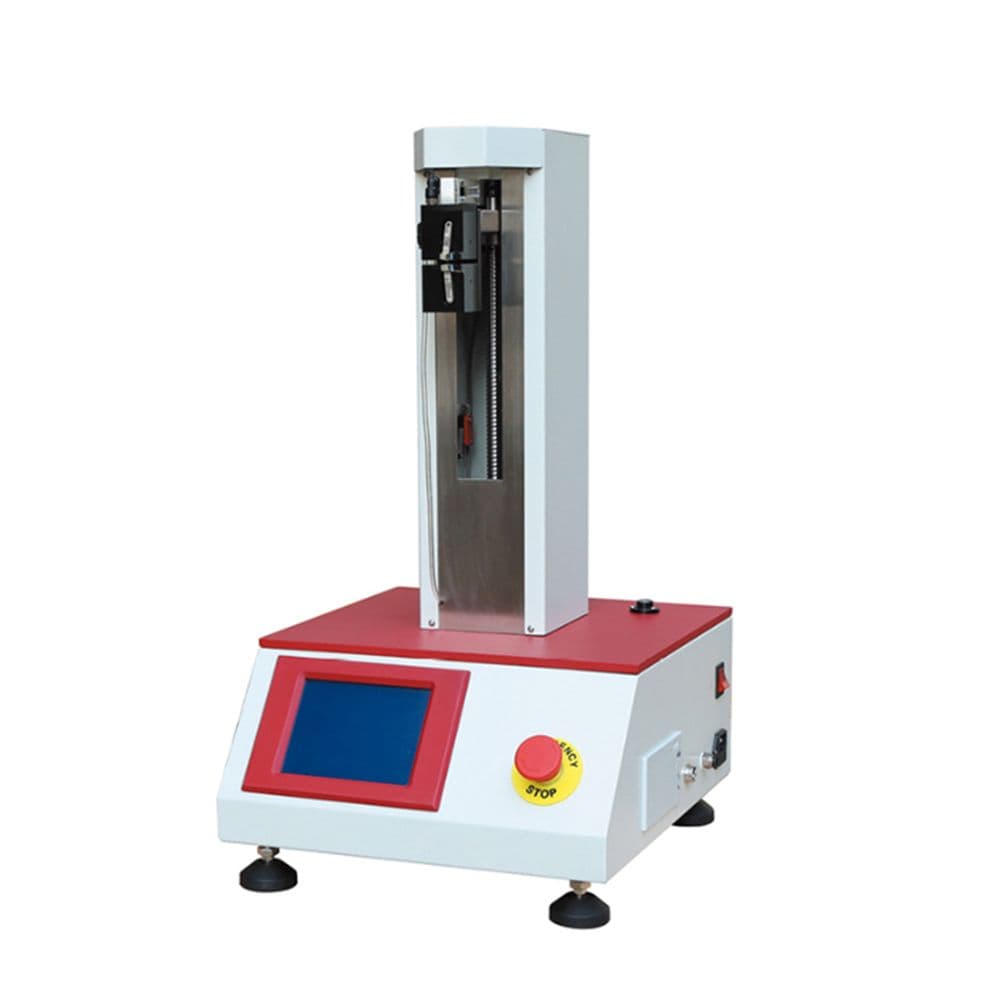
Fibre Tensile Test
Variant (SKU)
ASTM D3822
ISO 5079
Price may vary based on selected options
Delivery time: 1 ~ 2 weeks
The Fibre Tensile Test is a fundamental mechanical test used to determine individual fibres' strength and elongation properties. This test is crucial in materials science, textile engineering, and composite material research, as it provides essential information about how fibres will perform under tension in real-world applications.

Introduction
Introduction
The fibre tensile test is a key mechanical test used to evaluate individual fibres' strength and elongation properties. The test is widely used in materials science, textile engineering, and composite material research. It is a fundamental method for assessing the mechanical properties of fibres, ensuring they meet the requirements for their intended applications. Key Parameters Measured
- Tensile Strength: The maximum stress the fibre can withstand before failure.
- Modulus of Elasticity: A measure of the fibre's stiffness.
- Elongation at Break: The extent to which the fibre can stretch before breaking.

Principle
Principle
The fibre tensile test operates on the fundamental principle of subjecting a single fibre to a uniaxial tensile force under controlled conditions, intending to characterize its mechanical properties. The test provides critical insights into: Tensile Strength The maximum stress the fibre can withstand before breaking. Elongation at Break The amount the fibre stretches before it breaks. Young’s Modulus A measure of the fibre’s stiffness or resistance to deformation.

Principle
Test Procedure
Our fibre tensile testing workflow typically includes:
- Sample preparation: Select suitable fibres, drying pretreatment
- Conducting the Test:Moun the Fibre, Set Test Parameters according to the relevant standard
- Data Collection: stress, elongation
- Repetition and Averaging
Sample Requirements
Sample Requirements
To ensure accurate measurements, samples should meet these guidelines:
- For Staple Fibre:
- Sufficient quantity (≥10 )
- Length: 5-60mm
- For Filament Fibre:
- Length: 5-50cm, depending on the test method
- Other notes:
- Condition: Notify if fibre is free from visible defects such as knots, kinks, crimps, or surface damage.
- Packaging: Airtight and moisture-proof containers.
Feel free to contact our team for questions regarding specific materials or sample preparation requirements. If your sample exceeds standard requirements, please contact us for a customized solution.
Application Case
Application

Applicable industries
Applicable Material Types:
- Natural fibres: cotton, wool, silk, flax, jute.
- Synthetic fibres: polyester, nylon, acrylic, and polypropylene, etc.
- Regenerated fibres: viscose rayon, lyocell, and acetate.
- Mineral fibres: glass fibres, basalt fibres, and asbestos.
- Special fibres: metal fibres, carbon fibres, aramid fibres (e.g., Kevlar), and ultra-high-molecular-weight polyethylene (UHMWPE) fibres.

Industrial Application
Industries and Applications:
- Traditional Textile: fibres that process into yarns, apparel or home textiles.
- Aerospace: fiber-reinforced fuselage sections, wings, tail assemblies, ballistic protection panels.
- Automotive equipment: interior components that are made from fibres.
- Civil engineering: geotextile fabric, ropes, cables.
- Medical Devices: fibre-reinforced 3D printing, surgical sutures, implants, and tissue engineering scaffolds.
- Filtration and Protective Equipment: Fibres in filters, bulletproof vests, and fire-resistant clothing.
Example Result

Heat treatment: Carburizing
Example Results
Average breaking strength and elongation of PLA
| 1 | 2 | 3 | 4 | 5 | 6 | 7 | 8 | 9 | 10 | Average | |
|---|---|---|---|---|---|---|---|---|---|---|---|
| Strength (cN) | 110.10 | 165.1 | 132.4 | 155.1 | 110.4 | 144.1 | 139.4 | 160.1 | 130.6 | 156.3 | 139.5 |
| Elongation (%) | 78.6 | 113.2 | 91.8 | 108.2 | 78 | 109.4 | 98.6 | 109 | 95.6 | 116.6 | 100.5 |
What our customers are saying
Need precise analysis? Contact us – we'll help you choose the best solution for your needs.

Frequently Asked Questions
- The initial modulus of a fiber is determined by measuring the slope of the stress-strain curve in the very early, linear portion of the curve, where the relationship between stress and strain is proportional. This is typically done by drawing a tangent to the curve at the origin (the starting point) and calculating the ratio of stress to strain within this linear region.
- The initial modulus represents the stiffness of the fiber at the beginning of deformation. It indicates how much the fiber resists elastic deformation under an applied load. A higher initial modulus means the fiber is stiffer and less likely to stretch when a small force is applied.
- The initial modulus of a fiber is determined by measuring the slope of the stress-strain curve in the very early, linear portion of the curve, where the relationship between stress and strain is proportional. This is typically done by drawing a tangent to the curve at the origin (the starting point) and calculating the ratio of stress to strain within this linear region.
- The initial modulus represents the stiffness of the fiber at the beginning of deformation. It indicates how much the fiber resists elastic deformation under an applied load. A higher initial modulus means the fiber is stiffer and less likely to stretch when a small force is applied.
- Onset of Localized Deformation: After the fiber reaches its maximum (ultimate) tensile strength, a localized region may begin to deform more than the rest, leading to a reduction in the cross-sectional area at that point. This is known as necking.
- Decrease in Load-Bearing Capacity: In some fibers, molecular alignment or microstructural changes during stretching can also lead to a reduction in stress with increasing strain.
- Material Structure Changes: In some fibers, molecular alignment or microstructural changes during stretching can also lead to a reduction in stress with increasing strain.
- Yield strength (A) - The stress a material can withstand without permanent deformation. Know more »
- Ultimate strength (B) - The maximum stress a material can withstand
- Breaking strength (C) - The stress coordinate on the stress-strain curve at the point of rupture
