info@universallab.org
WhatsApp: +41762172997
logo-header
​
logo
Material Testing
Mechanical Testing
Tensile TestFibre Tensile TestHardness TestImpact TestFatigue TestOthers
Thermal Testing
Thermomechanical AnalysisDSCTGATGA (TG-DSC, TG-DTA)
Surface, Coating and Corrosion
Adhesion TestScratch TestCorrosion Cycle Test
Physical Properties
Functional propertiesPorosityDensity
Elemental & Chemical Composition
Compositional analysisElemental analysis
Microscopic Characterization
Particle analysisMicroscopy
Product Testing
Food & Agriculture Testing
Consumer Goods Testing
Electronics & Electrical Testing
Medical & Pharmaceutical Testing
Automotive & Transportation Testing
Packaging & Materials Testing
Chemical & Hazardous Substances Testing
Semiconductor Testing
Battery Testing
Petrochemical Testing
Environmental Test
Water Testing
Drinking Water Analysis
Soil & Sediment Testing
Soil Chemistry (pH, Nutrients)
Air Testing
Particulate Matter (PM2.5, PM10)
Noise & Acoustic Testing
Industrial/Occupational Noise
Waste & Sludge Testing
Hazardous Waste Classification
Instrumental Test
Spectroscopy
Emission
XRFXPSICP-OESGD-OES
Absorption
FTIRUV/VIS/NIRAAS
Mass Spectrometry
SIMSICP-MS
Other
RamanNMR
Microscopy
Electron
SEMTEMEBSDEMPA
Other
AFMFIB
Mechanical
Volumetric
Tensile TestFibre Tensile TestImpact TestFatigue Test
Surface
HardnessNanoindentationScratch
Others
Thermal Analysis
TGADSC
Physical Analysis
BETLaser diffractionDensityContact AngleZeta potential
Chromatography
GCHPLCIC
Services
  • Applications
  • Techniques
  • Standards
  • Industries
Regulatory testing
  • PFAS
  • REACH
  • VOC
Environmental testing
  • Water
  • Gas
Data analysis
  • XRD
  • XPS
  • FTIR
  • Raman
  • NMR
  • CT
  • SIMS
  • TGA
Blog
  • Knowledge
  • News
  • Policy
  • About us
    Contact

    Sample Requirements

    Application Case

    Example Result

    What our customers are saying

    Need precise analysis? Contact us – we'll help you choose the best solution for your needs.

    info@universallab.org+41 762172997
    Lab technician holding a blue flask

    Frequently Asked Questions

    HomeCategoryCart
    logo-footer-shop1

    European material analytical and measuring service provider dedicated for academic and industrial research

    About Us
    CareersTerms & ConditionsPrivacy Policy
    Customer Services
    Help CenterBecome a partnerReturns & Refunds
    Contact Us

    Parkstrasse 1, 5234 Villigen, Switzerland

    Email: info@universallab.org

    Phone: +41 762172997

    VAT: CHE-265.266.739 MWST

    © 2026 By Universallab. All rights reserved.

    This site is protected by reCAPTCHA and the Google Privacy Policy and Terms of Service apply.
    product
    product-0

    High Performance Liquid Chromatography

    Variant (SKU)
    Compounds identification

    Price may vary based on selected options

    Delivery time: 1 ~ 2 weeks

    Introduction

    Introduction

    Introduction

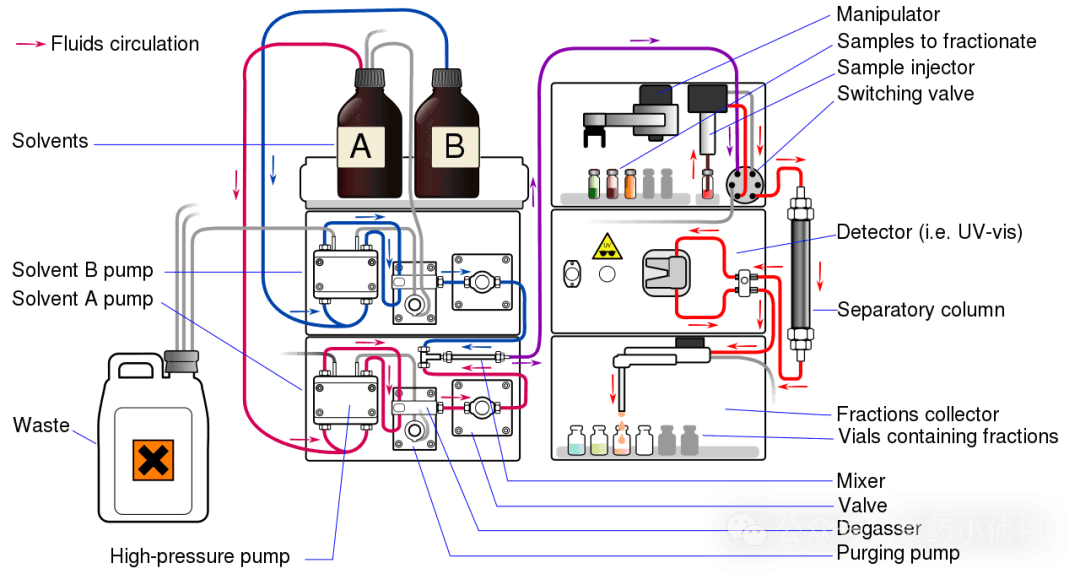
    HPLC is an analytical technique that uses a liquid as the mobile phase to separate the various components within a sample. Its core principle lies in the differing distribution coefficients of the components between the stationary and mobile phases, leading to their separation within the chromatographic column.

    Technical Advantages

    • High separation efficiency, suitable for complex samples
    • High detection sensitivity (down to ppm-ppb levels)
    • Fast analysis speed, most samples completed within 30 minutes
    • High degree of automation, supports batch analysis

    Scope

    • Pharmaceutical Analysis: Determination of active ingredients, impurities, and stability.
    • Food Testing: Analysis of preservatives, sweeteners, pesticide residues, vitamins, etc.
    • Natural Product Research: Extraction, separation, and quantification of components.
    • Biological Sample Analysis: Analysis of amino acids, nucleotides, protein hydrolysates, etc.
    Principle

    Principle

    Principle

    • Mobile Phase Delivery: A high-pressure pump delivers the mobile phase (liquid solvents such as methanol, acetonitrile, water, etc.) into the chromatographic column at a constant flow rate, creating a stable mobile phase flow path.
    • Sample Separation: The column is packed with a stationary phase (such as C18, C8, silica gel, etc.). Due to differences in the interaction forces (hydrophobic interactions, polar interactions, ion exchange, etc.) between different components and the stationary phase, their retention times within the column vary, resulting in separation.
    • Detection and Signal Output: The separated components flow sequentially into a detector (such as a UV detector, fluorescence detector FLD, evaporative light scattering detector ELSD, etc.). The detector converts the component concentration into an electrical signal, which is recorded by the data processing system as a chromatogram.

    • Quantification in HPLC is most commonly carried out using the external standard method. quantitative principle: peak area or peak height changes proportionally with concentration.
    • If you require other quantification methods, please communicate in advance. For the external standard method, in addition to completing the coordination form, you also need to provide the following information: A. Reference standard of the target compound—for external standard calibration;
      B. Concentration range of the target compound—to determine the calibration range.

    • To quantitatively determine the concentration of a substance, a reference standard with a purity of 99% (called a reference standard) is used to prepare a series of solutions with different concentrations for analysis. These solutions of known concentrations are called calibration points.
    • The concentrations (X-axis) and corresponding peak areas (Y-axis) are used to fit a linear equation, which is called a calibration curve.
    • When analyzing an unknown sample, the peak area is substituted into the equation to calculate the concentration.

    • Qualitative analysis in HPLC is based on retention time.
    • This step also requires you to provide a reference standard. By comparing the retention time of the standard with that of the analyte, qualitative identification is achieved.
    • If your sample is complex and the target compound’s peak may be interfered with by other components, even if the retention time matches the standard, it cannot be confirmed that the target compound is present.
    • Therefore, for qualitative analysis by HPLC, the target compound should be of relatively high purity.

    • Pre-concentration pretreatment can be performed, as natural samples often contain the target compound at levels below the detection limit. After enrichment, quantification within the detection limit becomes possible.
    Test procedure

    Test procedure

    • Biopharmaceutical Field:

      (1) Drug Research and Development: HPLC is used for the analysis of drug components, purity testing, impurity analysis, and the study of drug metabolites during the drug development process.

      (2) Clinical Diagnostics: In clinical diagnostics, HPLC can be used to detect drug concentrations, metabolites, and certain disease biomarkers in biological samples.

      (3) Proteomics and Metabolomics: HPLC is applied for the separation and purification of biomacromolecules such as proteins, peptides, and nucleic acids, enabling the study of their structure and function.

    • Food Analysis: HPLC is used to detect food additives, pesticide residues, veterinary drug residues, and nutritional components.

    • Environmental Monitoring: HPLC is applied for the analysis and monitoring of organic pollutants in the environment, such as pesticides, polycyclic aromatic hydrocarbons (PAHs), and the detection and quantification of harmful substances like heavy metal ions.

    • Fine Chemical Industry: HPLC is involved in various fields such as petrochemicals, organic synthesis, and biochemistry, and is used for the analysis of surfactants, dyes and their intermediates, organic acid content, and the quality of polymer monomers.

    • Traditional Chinese Medicine Research: HPLC is used for establishing fingerprint profiles of traditional Chinese medicines, isolating and purifying active ingredients, and setting quality standards for herbal medicines.

    • Hyphenated Techniques:

      Liquid chromatography-mass spectrometry (LC-MS) can be used to analyze carbamate pesticides and PAHs.

      Liquid chromatography-infrared spectroscopy (LC-IR) can be used for environmental pollution analysis, such as the determination of hydrocarbons in water and non-volatile hydrocarbons in seawater.
    Principle

    Principle

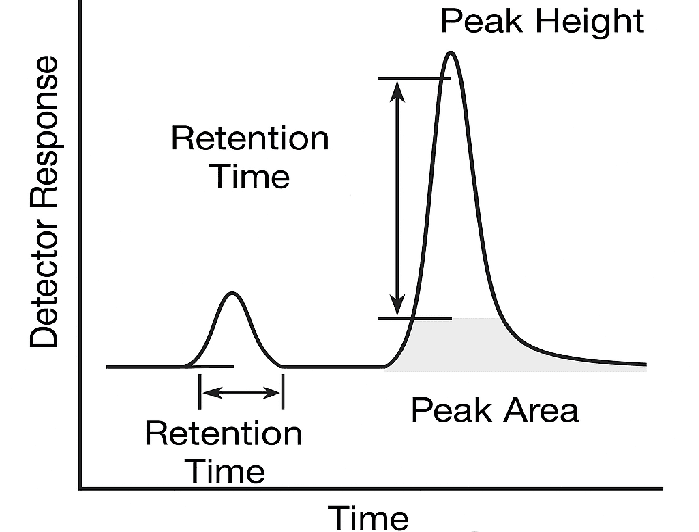
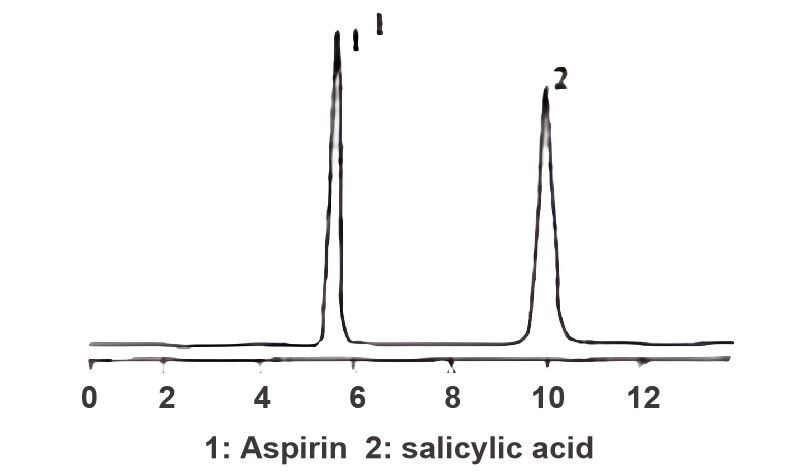
    • Liquid Chromatogram: A liquid chromatogram displays the separation of compounds, and is viewed at a specific detection wavelength. The Y-axis represents intensity, while the X-axis represents retention time.
    • Retention Time (tR): The time required for a sample component to travel from injection to its maximum peak, serving as the basis for component identification.
    • Peak Area / Peak Height: Represents the concentration of a component and is commonly used for quantitative analysis. The peak area is proportional to the concentration, and, together with a calibration curve, can be used to calculate the sample concentration.
    • Resolution (Rs): Used to evaluate the separation between two adjacent components. An Rs value greater than 1.5 is generally considered to indicate good separation.
    • Number of Theoretical Plates (N): A parameter used to measure column efficiency; the higher the value, the better the separation performance of the chromatographic column.
    Test procedure

    Test procedure

    • Example: Detection of caffeine in beverages
    • Column: C18 column (4.6 mm × 150 mm, 3.5 μm)
    • Mobile phase: Acetonitrile - Water (10:90)
    • Detection wavelength: 273 nm
    • Application Scenarios:Detection of food additives (e.g., preservatives, sweeteners)Pesticide residue analysis Vitamin content determination Flow rate: 0.8 mL/min

    Before conducting HPLC analysis, it is essential to clearly specify the sample conditions.

    • Sample requirements: For powder samples, at least 10 mg is required; for liquid samples, at least 0.5 mL is required.
    • Special notes: Samples must be readily soluble in common mobile phases (such as water, methanol, acetonitrile, etc.). If your sample contains inorganic salts, please inform us in advance.
    • Please discuss the detailed testing method with us before shipping your samples.Providing comprehensive information about the sample’s physical state, solubility, and any special components ensures that the appropriate testing methods and solvents are selected. This not only helps to avoid potential issues during analysis but also ensures accurate and reliable results, preventing unnecessary delays in your project.
    • Chromatographic testing involves various conditions, so pricing will be determined based on your specific testing requirements.
  • The drawback is that an appropriate pretreatment procedure must be determined.
  • The specific pre-concentration process must be provided by the client, as the steps vary depending on the target compound. Selecting the appropriate concentration method is crucial for the accuracy of the results.
    • The detection limit of HPLC is not a fixed value.
    • The detection limit is defined as the minimum concentration or amount of an analyte that can be detected with a given analytical method at a specified confidence level.
    • The main factors affecting the HPLC detection limit are the test method and the analyte.
    • For example, if Client A’s sample is a liquid and the tetracycline content needs to be determined, the instrument is set up according to the test method, and standard solutions are injected until a peak for tetracycline is observed at a concentration clearly above the blank (typically three times the noise level). This concentration is considered the detection limit.If no information about the sample is provided and the question is simply “What is the detection limit of the instrument?”, it indicates a lack of understanding of the definition of detection limit and the basic principles of HPLC.

    • Liquid chromatography can be coupled with various detectors, such as UV detectors, fluorescence detectors, evaporative light scattering detectors, and mass spectrometers.
    • The former detectors rely more on reference standards for qualitative analysis and generally assume that one peak corresponds to one compound, thus requiring strict peak separation.
    • When coupled with a mass spectrometer, it is referred to as LCMS. LCMS, due to the sensitivity of the mass spectrometer, focuses on fragment identification. Even if only one peak appears in LCMS, the mass spectral data can be used to determine whether the front, back, or apex of the peak corresponds to the same compound.
    • Therefore, these are two different analytical techniques, and their data are not directly comparable.

    High Performance Liquid Chromatography (HPLC) is an important branch of chromatography that uses a liquid as the mobile phase. A high-pressure delivery system pumps the mobile phase—comprising single solvents of varying polarity or mixed solvents and buffer solutions in different proportions—through a chromatographic column packed with a stationary phase. Within the column, the components of the sample are separated and subsequently enter a detector for analysis. This technique has become a vital separation and analytical method in fields such as chemistry, medicine, industry, agriculture, commercial inspection, and forensic science.