
info@universallab.org
WhatsApp: +41762172997

logo-header
​
logo
Material Testing
Mechanical Testing
Tensile TestFibre Tensile TestHardness TestImpact TestFatigue TestOthers
Thermal Testing
Thermomechanical AnalysisDSCTGATGA (TG-DSC, TG-DTA)
Surface, Coating and Corrosion
Adhesion TestScratch TestCorrosion Cycle Test
Physical Properties
Functional propertiesPorosityDensity
Elemental & Chemical Composition
Compositional analysisElemental analysis
Microscopic Characterization
Particle analysisMicroscopy
Product Testing
Food & Agriculture Testing
Consumer Goods Testing
Electronics & Electrical Testing
Medical & Pharmaceutical Testing
Automotive & Transportation Testing
Packaging & Materials Testing
Chemical & Hazardous Substances Testing
Semiconductor Testing
Battery Testing
Petrochemical Testing
Environmental Test
Water Testing
Drinking Water Analysis
Soil & Sediment Testing
Soil Chemistry (pH, Nutrients)
Air Testing
Particulate Matter (PM2.5, PM10)
Noise & Acoustic Testing
Industrial/Occupational Noise
Waste & Sludge Testing
Hazardous Waste Classification
Instrumental Test
Spectroscopy
Emission
XRFXPSICP-OESGD-OES
Absorption
FTIRUV/VIS/NIRAAS
Mass Spectrometry
SIMSICP-MS
Other
RamanNMR
Microscopy
Electron
SEMTEMEBSDEMPA
Other
AFMFIB
Mechanical
Volumetric
Tensile TestFibre Tensile TestImpact TestFatigue Test
Surface
HardnessNanoindentationScratch
Others
Thermal Analysis
TGADSC
Physical Analysis
BETLaser diffractionDensityContact AngleZeta potential
Chromatography
GCHPLCIC
Services
  • Applications
  • Techniques
  • Standards
  • Industries
Regulatory testing
  • PFAS
  • REACH
  • VOC
Environmental testing
  • Water
  • Gas
Data analysis
  • XRD
  • XPS
  • FTIR
  • Raman
  • NMR
  • CT
  • SIMS
  • TGA
Blog
  • Knowledge
  • News
  • Policy
  • About us
    Contact

    Sample Requirements

    Application Case

    Example Result

    What our customers are saying

    Need precise analysis? Contact us – we'll help you choose the best solution for your needs.

    info@universallab.org+41 762172997
    Lab technician holding a blue flask

    Frequently Asked Questions

    HomeCategoryCart
    logo-footer-shop1

    European material analytical and measuring service provider dedicated for academic and industrial research

    About Us
    CareersTerms & ConditionsPrivacy Policy
    Customer Services
    Help CenterBecome a partnerReturns & Refunds
    Contact Us

    Parkstrasse 1, 5234 Villigen, Switzerland

    Email: info@universallab.org

    Phone: +41 762172997

    VAT: CHE-265.266.739 MWST

    © 2026 By Universallab. All rights reserved.

    This site is protected by reCAPTCHA and the Google Privacy Policy and Terms of Service apply.
    product
    product-0

    Water testing

    Variant (SKU)

    Please contact us for price quotation

    Delivery time: 1 ~ 2 weeks

    Inquiry

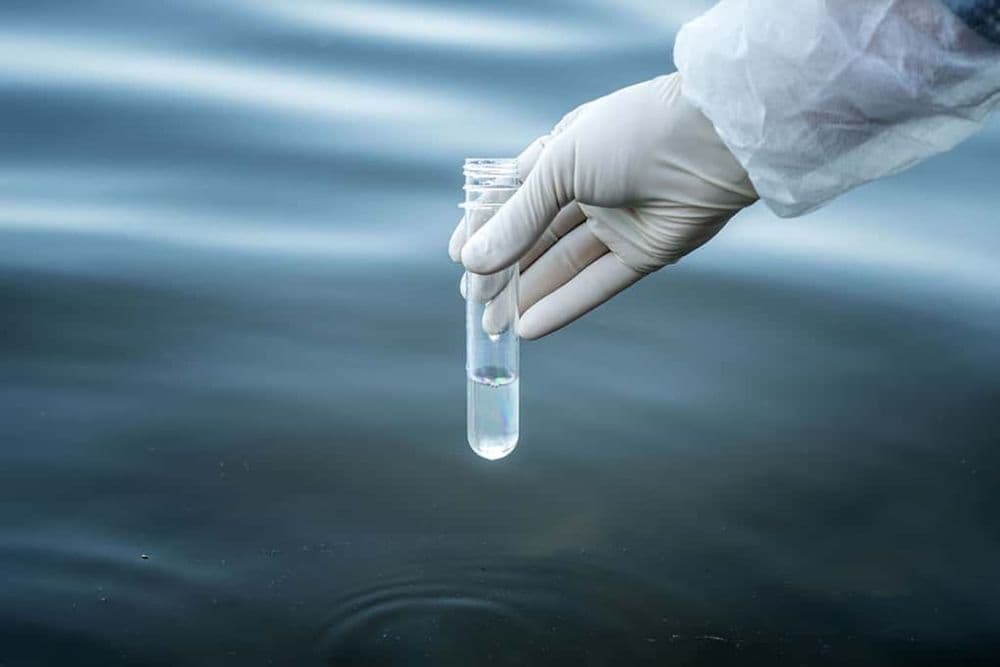
    Water testing refers to the analysis of water quality parameters in various types of water—drinking water, surface water, groundwater, wastewater, industrial effluent, and more. These tests evaluate the presence of chemical, physical, and biological contaminants, ensuring compliance with health, environmental, and industrial standards.

    Introduction

    Introduction

    Introduction

    Water testing refers to the analysis of water quality parameters in various types of water—drinking water, surface water, groundwater, wastewater, industrial effluent, and more. These tests evaluate the presence of chemical, physical, and biological contaminants, ensuring compliance with health, environmental, and industrial standards. Water testing plays a crucial role in public health protection, environmental monitoring, process control in industries, and regulatory reporting. It helps detect both routine indicators (e.g., pH, turbidity) and trace contaminants (e.g., heavy metals, PFAS, VOCs, bacteria).

    Typical turnaround is 3–7 business days. Rush services available upon request.

    Yes. Our testing reports follow ISO/EPA norms and can be used for permit and audit submissions.

    Yes, on-site sampling can be arranged depending on location and project scope.

    COD measures chemically oxidizable organic matter; TOC measures total organic carbon. They reflect different aspects of organic pollution.

    Yes, we offer high-sensitivity LC-MS/MS analysis for ultra-trace organics (ppt level).

    Principle

    Principle

    Typical Water Types and Applications

    Water TypeCommon Applications
    Drinking waterCompliance with health standards, consumer safety
    Surface water (lakes, rivers)Environmental monitoring, ecological risk assessment
    GroundwaterContamination tracking, agricultural suitability
    Industrial wastewaterEffluent treatment verification, discharge permit compliance
    Cooling/process waterCorrosion control, scale/deposit monitoring
    SeawaterDesalination pre-screening, marine monitoring
    Principle

    Principle

    1 Drinking Water

    • pH: 7.2
    • TDS: 230 mg/L
    • Lead (Pb): < 1.0 µg/L
    • Nitrate: 12.5 mg/L
    • Total Coliforms: Not Detected

    2 Industrial Water

    • COD: 430 mg/L
    • Ammonia-N: 22.3 mg/L
    • Hexavalent Chromium (Cr⁶⁺): 0.08 mg/L
    • Oil and grease: 15.4 mg/L
    Principle

    Principle

    1. Key Parameters Tested

    1.1 Basic Indicators

    • pH
    • Conductivity / TDS (Total Dissolved Solids)
    • Turbidity
    • Color and Odor
    • Temperature

    1.2 Chemical Contaminants

    • Anions: Nitrate, Nitrite, Chloride, Sulfate, Fluoride
    • Cations: Calcium, Magnesium, Sodium, Potassium
    • Heavy metals: Lead (Pb), Cadmium (Cd), Mercury (Hg), Arsenic (As), Chromium (Cr)
    • Nutrients: Total nitrogen (TN), Total phosphorus (TP), Ammonia (NH₃-N)
    • Organic pollutants: VOCs, PFAS, pesticides, phenols

    1.3 Microbiological Indicators

    • Total coliforms
    • E. coli
    • Heterotrophic plate count (HPC)
    • Legionella spp.
    • Enterococcus spp.

    2. Key Parameters Tested

    2.1 Basic Indicators

    • pH
    • Conductivity / TDS (Total Dissolved Solids)
    • Turbidity
    • Color and Odor
    • Temperature

    2.2 Chemical Contaminants

    • Anions: Nitrate, Nitrite, Chloride, Sulfate, Fluoride
    • Cations: Calcium, Magnesium, Sodium, Potassium
    • Heavy metals: Lead (Pb), Cadmium (Cd), Mercury (Hg), Arsenic (As), Chromium (Cr)
  • Nutrients: Total nitrogen (TN), Total phosphorus (TP), Ammonia (NH₃-N)
  • Organic pollutants: VOCs, PFAS, pesticides, phenols
  • 2.3 Microbiological Indicators

    • Total coliforms
    • E. coli
    • Heterotrophic plate count (HPC)
    • Legionella spp.
    • Enterococcus spp.

    3. Test Methods and Standards

    Parameter TypeMain Methods UsedStandards Followed
    General ChemistrySpectrophotometry, titration, electrodesISO 10523, ISO 9963, EPA 150.1
    Metals (e.g., Pb, Hg)ICP-OES, ICP-MS, AASEPA 200.8, ISO 11885
    Organics (VOCs, PFAS)GC-MS, LC-MS/MSEPA 524.2, 537.1, ISO 25101
    MicrobiologyMembrane filtration, MPN, culture-based methodsISO 9308-1, EPA 1603, ISO 7899-2

    4. Pros and Cons of Water Testing Methods

    MethodSensitivityTarget AnalytesTime RequiredCost
    Spectrophotometryppm–ppbNutrients, anions, colorShortLow–Med
    ICP-OES / ICP-MSppb–pptMetalsMediumMedium
    GC-MS / LC-MS/MSpptVOCs, PFAS, organicsMedium–LongHigh
    Culture-based methodsCFU/mLBacteria, coliforms24–72 hoursMedium

    5. Testing Packages

    We offer flexible water quality testing packages tailored to different needs, from basic safety checks to extended compliance with regulatory standards.

    Package A — Basic Safety Panel

    • Number of Tests: 22
    • Included Parameters:
      Color, Turbidity, Odor and Taste, Visible Substances, pH, Copper, Zinc, Lead, Mercury, Selenium, Chloroform, COD (Potassium Dichromate), Total Hardness, Cadmium, Fluoride, Chloride, Nitrate, Total Bacteria Count, Chromium, Arsenic, E. coli
    • Recommended for: Routine safety monitoring of tap or bottled water

    Package B — Microbial + Inorganics Compliance Panel

    • Number of Tests: 22
    • Included Parameters:
      Total Coliforms, E. coli, Total Bacteria Count, Arsenic, Cadmium, Chromium (Hexavalent), Lead, Mercury, Selenium, Cyanide, Fluoride, Nitrate (as N), Bromate, Chlorite, Chlorate, Color, Turbidity, Odor and Taste, Visible Substances, pH, Total Hardness, Potassium Permanganate Index (as Oxygen)
    • Recommended for: Regulatory testing and microbial risk assessment

    Package C — Extended Chemical Safety Panel

    • Number of Tests: 37
    • Included Parameters:
      All 22 tests from Package B, plus:
      Trichloromethane, Dichlorobromomethane, Chlorodibromomethane, Tribromomethane, Total Trihalomethanes (THMs), Dichloroacetic Acid, Trichloroacetic Acid, Aluminum, Iron, Manganese, Dissolved Solids, Sulfate, Ammonia (as N)
    • Recommended for: Public water systems, bottled water producers, and industrial users

    Package D — Comprehensive Risk Panel (incl. Radioactivity)

    • Number of Tests: 39
    • Included Parameters:
      All 37 tests from Package C, plus:
      Total α-Radioactivity, Total β-Radioactivity
    • Recommended for: Comprehensive compliance testing in sensitive areas (e.g. near industrial, mining, or nuclear facilities)