
info@universallab.org
WhatsApp: +41762172997
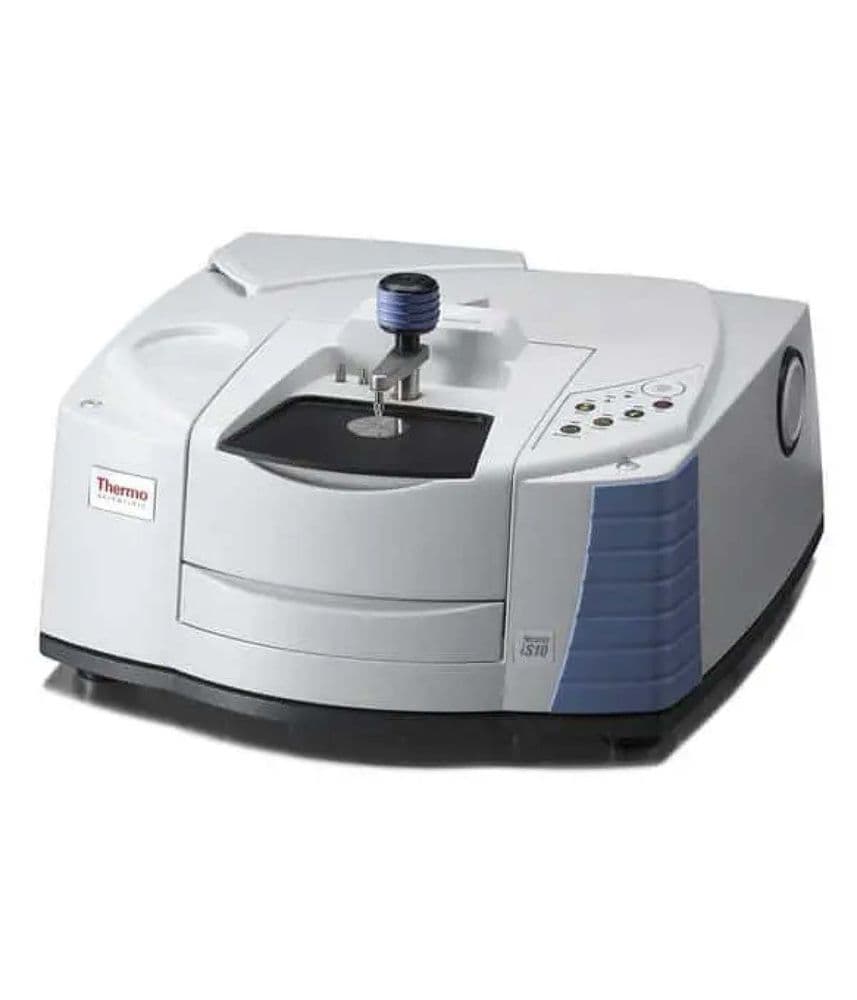
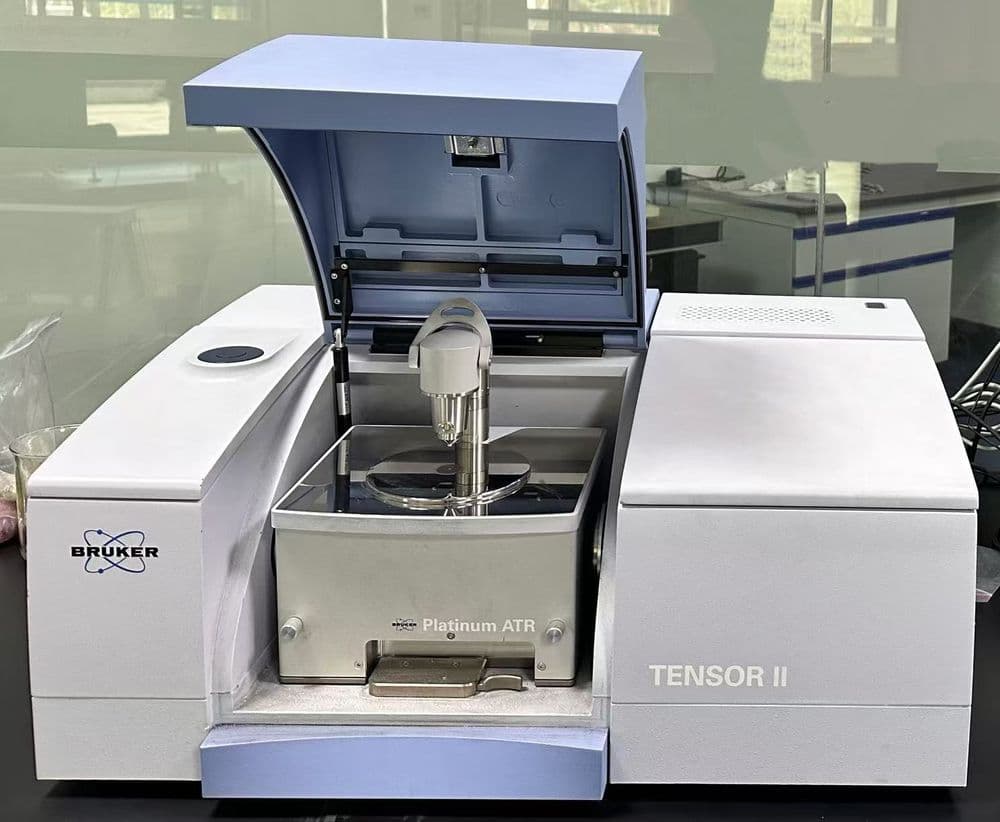
Fourier-transform Infrared Spectroscopy FTIR
Variant (SKU)
Pellet pressing for powder
ATR mode
Liquid cell
+ Data analysis
Price may vary based on selected options
Delivery time: 1 ~ 2 weeks
Fourier Transform Infrared (FTIR) spectroscopy, as a highly efficient and precise analytical technique, can identify the functional groups of organic and inorganic compounds, analyze their structures, and conduct qualitative and quantitative analysis by analyzing the absorption peaks of infrared light by substances.This technique is widely used in material science, chemistry, biology, environmental science, and other fields for the identification and quantitative analysis of compounds.

Introduction
Introduction
- The Fourier Transform Infrared Spectrometer (FTIR) is an analytical instrument that investigates the molecular structure and chemical composition of substances by analyzing their absorption characteristics across different infrared wavelengths.
- In addition to the conventional transmission mode, the instrument is equipped with accessories such as Attenuated Total Reflectance (ATR) and an integrating sphere, enabling internal reflection and diffuse reflection measurements.
- FTIR is widely used in various fields for material characterization, including the analysis of molecular functional groups, chemical bonds, and for both qualitative and quantitative analysis of substances.
Advantages:
- High sensitivity
- Rapid analysis
- High signal-to-noise ratio
- High resolution
- Non-destructive

Principle
Principle
- Principle: Near-infrared spectrometers consist of a light source, monochromator, detector, and computer information processing system. Infrared absorption spectra are generated by the transitions of vibrational energy levels of bonded atoms within molecules, where only vibrations that cause a change in the molecular dipole moment can produce infrared absorption.
- Principle of Infrared Analysis: Infrared light energy is absorbed, causing vibrational and rotational transitions in molecules with changing dipole moments.
- Representation of Spectra: The spectra are represented as relative transmitted light energy varying with transmission frequency.
- Information Provided: The position, intensity, and shape of peaks provide characteristic vibrational frequencies of functional groups or chemical bonds.
Sample Requirements

Technical Parameters
- Powder Samples :Dry and moisture-free; greater than 10 mg; particle size > 200 mesh.
- Bulk/Film Samples :Dry and moisture-free; the size should be larger than 0.5 cm × 0.5 cm. The testing surface must be indicated, and it is recommended to make marks on the packaging or the label paper. For samples that are too thick and hard, please consult the staff in advance.
- Liquid Samples :Non-toxic and non-corrosive; greater than 2 mL. The solvent should preferably not be water.
- Hygroscopic Samples :Store in a desiccator.
- Volatile, Sublimable, or Thermally Unstable Samples :Please store in a sealed container with a tightly closed lid or stopper and specify the storage conditions on the packaging and when placing the order.
- If your sample exceeds standard requirements, please contact us for a customized solution.
Application Case
application
-
Materials Field:
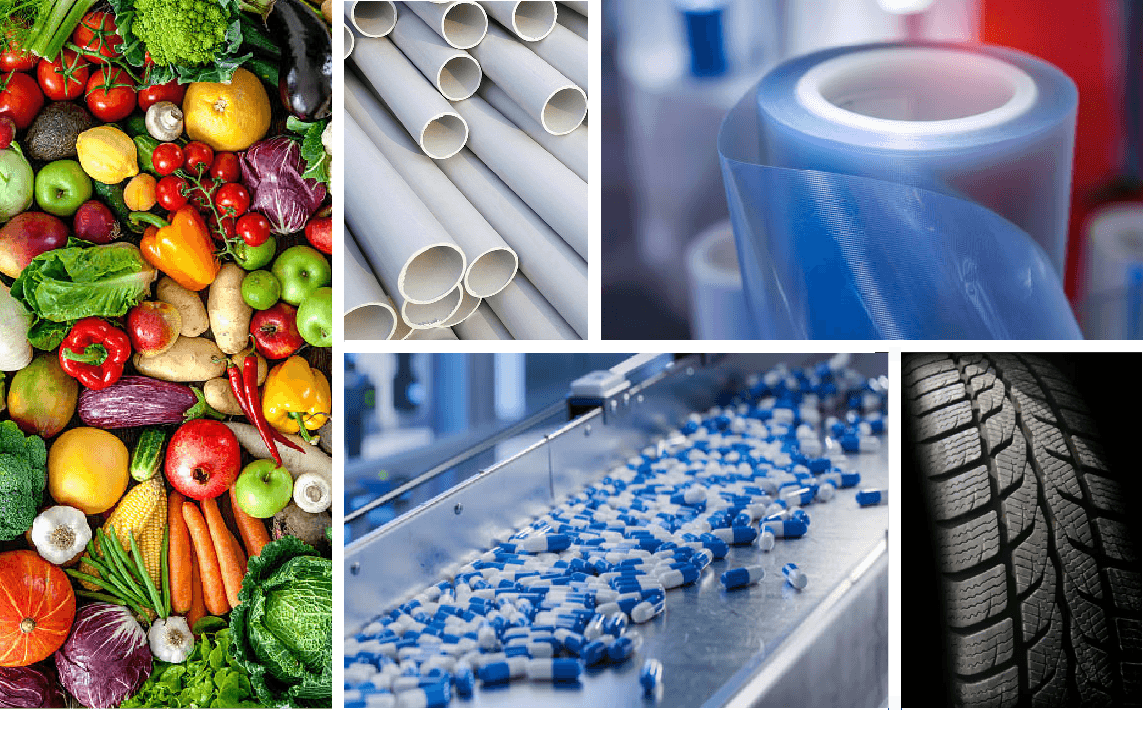
Analyze polymers, rubbers, coatings and other materials to determine the components of additives in the materials, the degree of aging, and the intermolecular interactions.
-
Pharmaceutical Industry:
Identify the active ingredients of drugs, monitor the drug synthesis process, check the changes in drug crystal forms, and ensure the quality and stability of drugs.
-
Environmental Monitoring:
Detect environmental pollutants, such as volatile organic compounds in the atmosphere and organic pollutants in water, to assist in environmental quality assessment.
-
Food and Agriculture:
Identify additives and preservatives in food, analyze the quality of agricultural products, and detect the organic functional groups in pesticide residues.
Example Result
Compositional Analysis
Compositional Analysis
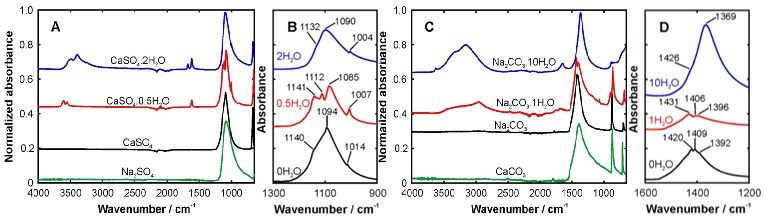
- Fourier-transform infrared spectroscopy (FTIR) was used to analyze inorganic deposits in domestic and industrial heat exchangers.(Energies, 2018, 11(4): 798.)
- By identifying the characteristic absorption peaks of inorganic components such as carbonates and sulfates in the deposits, the sources and formation mechanisms of scale were determined.
- This research falls within the interdisciplinary fields of environmental monitoring, equipment maintenance, and materials analysis.
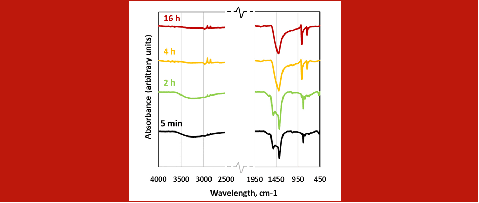
Comparative analysis before and after the reaction
Comparative analysis before and after the reaction
- FTIR spectra of the samples before and after the chemical transition from hydroxyl group-containing carbonate to anhydrous carbonate.(Arabian Journal of Chemistry, 2022, 15(3): 103636.)
- FTIR analysis detected the disappearance of the O–H stretching mode during the corrosion process, indicating the transformation from basic zinc carbonate to anhydrous zinc carbonate.
- This technique is applied in fields such as materials corrosion and protection, surface analysis, and environmental and energy engineering, and is particularly relevant for industrial applications like carbon dioxide capture and storage (CCS), as well as corrosion prevention in pipelines and equipment.
What our customers are saying
Need precise analysis? Contact us – we'll help you choose the best solution for your needs.

Frequently Asked Questions
Infrared data analysis can involve peak identification, where each peak is assigned to a specific functional group or bond type. Specific analysis projects include: peak identification, peak comparison, semi-quantitative peak analysis, peak deconvolution, protein secondary structure analysis,two-dimensional infrared analysis, and other types of analyses.
Infrared testing generally involves methods such as potassium bromide (KBr) pellet method, ATR (Attenuated Total Reflection), and liquid sample cell method.
- The KBr pellet method is suitable for powder samples, but it may introduce background peaks from KBr. To mitigate this, we typically subtract both KBr and air background (specific methods can be requested by clients). This subtraction helps reduce the interference caused by KBr, especially due to its tendency to absorb moisture and the resulting hydroxyl peaks.
- ATR is suitable for various solids, bulk films, and liquids that cannot be ground into powder. The advantage of ATR is that there is no interference from other impurity peaks, but some peaks may be weaker for certain samples.
- The liquid sample cell method is generally used for liquid samples, but if KBr windows are used, the sample should not contain water or react with KBr.
Transmittance spectra tend to highlight smaller peaks, which may sometimes make it easier to visually assess a sample. Absorption spectra have a linear relationship with concentration (while transmittance spectra do not). This makes absorbance suitable for quantitative analysis, spectral subtraction, and other operations. In peak refinement analysis, absorbance is often used due to the linearity of the spectral feature.
In infrared testing, absorbance and transmittance data can be converted using Omnic software.
The sample may absorb moisture from the air, or the KBr may not have been properly dried before testing.
ATR (Attenuated Total Reflection) involves placing the sample on an ATR crystal. The infrared light undergoes attenuated total reflection within the ATR crystal before reaching the detector. This method is commonly used for bulk, thin film, liquid, paste, gel, powder, and flexible polymer samples. It is easy to operate and avoids the interference of water peaks caused by KBr absorbing moisture.