
info@universallab.org
WhatsApp: +41762172997
Price may vary based on selected options
Delivery time: 1 ~ 2 weeks

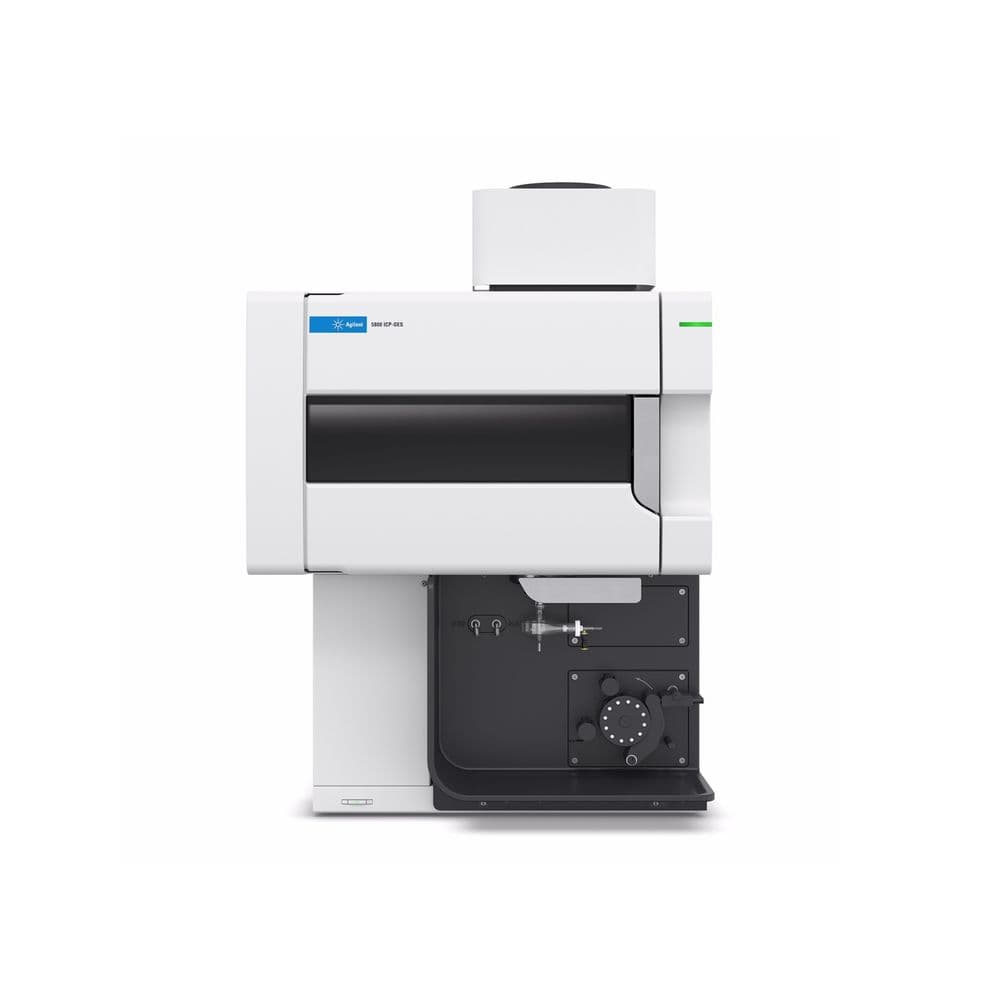
ICP-OES (Inductively Coupled Plasma – Optical Emission Spectrometry) is a powerful technique for multi-elemental analysis of a wide range of sample types. It provides key information such as: Multi-element Detection — Simultaneously quantifies multiple elements in a single run Wide Dynamic Range — Suitable for major to trace level analysis (sub-ppb to percent levels) High Sensitivity and Reproducibility — Fast results with strong accuracy and precision Matrix Compatibility — Handles complex sample matrices including environmental, industrial, and biological samples ICP-OES plays a key role in trace metal analysis across industries such as environmental monitoring, energy materials, pharmaceuticals, and manufacturing.

The process of ICP-OES analysis is mainly divided into three steps: excitation, spectroscopy and detection. 1.The use of plasma excitation light source to make the sample evaporation vaporization, dissociation or decomposition of the atomic state, the atom may be further ionized into an ionic state, the atoms and ions in the light source excitation luminescence. 2.The light emitted by the light source is decomposed into spectra arranged by wavelength using spectroscopic instruments. 3.The spectra are detected by photoelectric devices, and the specimen is analyzed qualitatively according to the wavelength of the spectra obtained, and quantitatively according to the intensity of the emitted light.

Differences in digestion methods, calibration standards, or instrument configuration can cause result variability. Standardizing procedures and using certified reference materials (CRMs) is recommended.
No, ICP-OES measures total elemental concentration. For speciation, techniques like IC-ICP-MS are needed.
Radial viewing offers better matrix tolerance, ideal for high-concentration samples. Axial viewing offers higher sensitivity for trace elements.
Salts affect plasma stability and ionization efficiency. Use matrix-matched standards or internal standards to correct.
Common causes include nebulizer clogging, plasma instability, pump wear, or sample carryover.
Solids must be digested (e.g., with nitric acid or mixed acid digestion) to obtain a homogenous solution suitable for analysis.

ICP-OES is widely used for the detection of metallic elements and some non-metals in liquid samples or digested solids. It is capable of handling routine to complex matrices across various sectors.

| Element | Concentration (mg/L) | Detection Limit (mg/L) |
|---|---|---|
| Al | 0.132 | 0.005 |
| Fe | 1.042 | 0.010 |
| Zn | 0.067 | 0.002 |
| Cu | < 0.002 | 0.002 |
| Pb | 0.014 | 0.001 |
ICP-OES / ICP-MS analysis requires careful sample handling to ensure reliable results and protect instrument integrity. Please read the following sample submission guidelines before testing.
⚠️ Note: Elements such as Ru, Rh, As, Ag, U, P, S, Si may be difficult to digest or may generate weak signals. Quantitative accuracy cannot be guaranteed. However, ICP still offers relatively accurate estimates compared to other methods. Please evaluate the associated risks before proceeding with analysis.
a. Clarity and stability: Provide a transparent, clear, and stable solution without visible precipitates.
b. Organic solvents or carbon-containing liquids must not be submitted directly. Digest with nitric acid until carbon is completely removed.
c. Particulate-free: Solutions must be free of any undissolved solids or organic residues.
The ICP-OES workflow includes the following steps:
Modern ICP-OES systems allow for high-throughput automated analysis with excellent accuracy and minimal human intervention.
a. Powder samples: Provide at least 100 mg, finely ground. If possible, sieve through 200 mesh.
b. Trace amounts of solid samples should be wrapped in weighing paper and placed in a secure labeled tube.
ICP analysis is a destructive method. Material introduced into the instrument cannot be returned. Only unused portions of the sample (if available) can be recovered.
For limited sample quantities or special element testing, please consult your local project manager or contact our technical support team before submission.
Comparison of Elemental Analysis Methods (Method as Columns)
| Attribute | ICP-OES | AAS (Flame/Furnace) | ICP-MS | XRF | Wet Chemistry (Titration) |
|---|---|---|---|---|---|
| Working Principle | Optical emission from excited atoms in plasma | Light absorption by ground-state atoms | Mass detection of ions in plasma | X-ray induced fluorescence | Stoichiometric chemical reactions |
| Elements Detected | >70 (metals and non-metals) | Limited (~30) | >75 | ~40 | Limited |
| Detection Limits | sub-ppb to ppm | ppm to ppb (graphite furnace) | ppt to ppb | ppm | Variable |
| Sample Throughput | High (multi-element) | Low (single element) | High | Moderate | Low |
| Matrix Tolerance | Good (some interference correction available) | Moderate | High (collision/reaction cell options) | Variable | Low |
| Recommended Use | Routine trace analysis in complex matrices | Low-cost single-element analysis | Ultra-trace and speciation studies | Solid sample screening | Classical wet-lab environments |
Advantages:
Wide application range: more than 70 elements can be determined.
Multi-element simultaneous detection capability: multiple elements in a sample can be determined simultaneously. Once each sample is excited, different elements emit characteristic spectra, so that a variety of elements can be determined at the same time.
Good selectivity: Each element emits a different characteristic spectrum due to its different atomic structure. In analytical chemistry, this difference in nature, for some elements with very similar chemical properties has a particularly important significance. For example, niobium and tantalum, zirconium and hafnium, dozens of rare earth elements are difficult to analyze by other methods, and emission spectrometry can be no difficulty in distinguishing and determining them.
Low detection limit: general light source up to 10 ~ 0.1ug / g, the absolute value of up to 1 ~ 0.01ug. Inductively coupled high-frequency plasma (ICP) detection limit of up to ng / g level.
Higher accuracy: the relative error of general light source is about 5%~10%, and the relative error of ICP can be up to 1% or less.
Less specimen consumption. The calibration curve of ICP light source has a wide linear range of 4~6 orders of magnitude, which can be used to determine different contents of elements (high, medium and micro-content).
Common non-metallic elements such as oxygen, sulfur, nitrogen, halogens and other spectral lines in the far-ultraviolet region, the current general spectrometer can not yet be detected; there are some non-metallic elements, such as Te, etc., due to its high excitation potential, the sensitivity is low.
Limitations:
ICP-OES (Inductively Coupled Plasma – Optical Emission Spectrometry) is a widely applied technique for multi-elemental analysis across diverse industries. It is primarily used to quantitatively analyze metallic and semi-metallic elements in liquid solutions or acid-digested solids.
With its ability to handle complex matrices, deliver high sensitivity, and support simultaneous detection of multiple elements, ICP-OES is extensively utilized in fields such as environmental monitoring, battery materials, pharmaceuticals, metallurgy, and agriculture. The technique provides both qualitative and quantitative analysis of over 70 metallic elements and selected non-metals in a wide range of samples.